Choosing things to do in Piran
The main things to do in Piran connect the peninsula's old town with its hilltop monuments. Tartini Square gives the visit a clear starting point, while St. George and the city walls introduce climbs and separate entry decisions. Rather than treating every monument as a compulsory stop, choose between an architectural walk, a wall visit and time for the church complex. This keeps the day focused on what interests you.
A useful cultural route runs from the square past historic palaces and wall remains towards the Franciscan church and cloister, St. George and Cape Madonna with its lighthouse. Treat this as an outline rather than an accessibility itinerary. For explanations along the way, see Piran walking tours; for the background to the buildings, use the history guide.

Tartini Square and the surrounding architecture
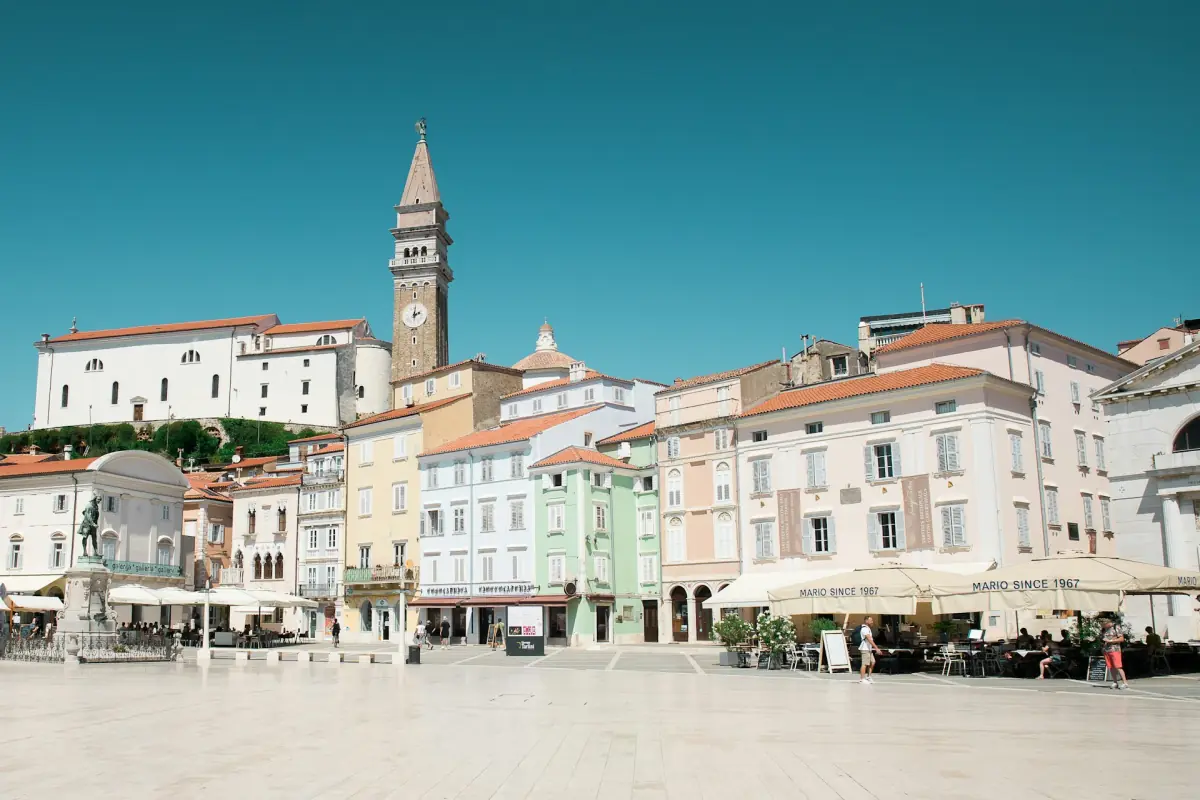
The square is named after Giuseppe Tartini, the violinist and composer born in Piran in 1692. Its open shape has a maritime explanation: this was the inner harbour, filled in during 1894. The bronze monument by Antonio dal Zotto has stood here since 1896. Looking between the statue, the surrounding façades and the routes out into the lanes is a good way to understand the town before heading uphill.
The Gothic Benečanka is among the historic buildings around the square. Architecture here belongs to a broader old-town visit rather than requiring a separate specialist excursion. Let the square be the place where you decide which interior or climb deserves more attention, rather than rushing straight through it to the next viewpoint.
Our pick: Things To Do
This Piran walking experience is an option for exploring the town.
Hand-picked tours, booked through Viator. Prices are indicative starting prices in euros (as of October 2026). Tap a tour for live availability and the current price in your currency.


A guided visit to Piran's old town
A 90-minute sightseeing walk offers a guided introduction to the town; fees and taxes are included.
Piran city walls: make the climb a deliberate choice
The surviving fortifications belong to several phases, with the third wall circuit built between 1470 and 1533. The visitor section has steep stairs and narrow passages. Its operator states that wheelchair access is unavailable and pets are not allowed. This makes the wall visit a distinct choice within your day, especially if anyone in your party needs to avoid stairs.
Bad weather closes the walls, so leave room to change the order of your sightseeing. Check the day's opening arrangements before climbing up. For arriving by car, read the parking and old-town access guide first: a sightseeing route through the lanes should not be confused with permission to drive along it.
St. George: church, bell tower and museum
St. George's complex includes the church, bell tower, baptistery and parish museum. The present Baroque church replaced its Gothic predecessor after 1595 and was completed and consecrated in 1637. The museum adds a treasury, a lapidarium and an archaeological basement, giving the visit more depth than an exterior photograph alone.
Choose which parts you want to enter and check the applicable opening arrangements. The bell tower closes in bad weather. If you prefer several cultural stops, the advertised culture pass covers the walls, St. George with museum and tower, and Mediadom. An online voucher must first be exchanged at the tourist information centre; each station may be visited once within three days of purchase. That is a validity period, so you can spread the visits rather than treating it as a guided itinerary.
Gallery, market and a change of emphasis
The Piran City Gallery offers a different emphasis from towers and defensive architecture. Keep the market as an optional everyday-town interest rather than building the whole day around an assumed schedule. If art is your main interest, Forma Viva at Seča is another cultural destination to consider separately. Choose the additional journey because you want the sculpture setting, rather than trying to collect every cultural stop in one walk.
For a waterfront break after the old town, compare the coastal bathing areas. A beach visit has different access and weather considerations from the monuments, so it works better as a separate decision than as an automatic extension of a hilltop route.
Questions about sightseeing in Piran
Where should an old-town visit begin?
Tartini Square is a practical starting point. From there, choose the cultural route towards the churches or a separate climb to the visitor section of the walls.
Are the city walls suitable for wheelchair users?
The operator describes steep stairs and narrow passages and states that the wall visit is not wheelchair accessible. Choose a different sightseeing focus if these conditions do not suit your party.
Does the sightseeing walk include a tasting?
The walk presented here lasts 90 minutes and includes fees and taxes. For food and wine experiences, compare the dedicated tasting options instead.